Best B2B Fintech SEO Agencies in 2026: Full Comparison & Buyer’s Guide
Fintech SEO is not generic B2B SEO with a few finance keywords swapped in. Google grades financial content against a str...

The demo video is not a brand film nor is it a generic explainer. A demo video has one job: show your product doing the thing your buyer is stuck on. It should look like your real software. It should talk about the problem your buyer actually has. And it should fit wherever you’re going to show it. A homepage demo and a LinkedIn ad are not the same cut–even if they are about the same product.
That is why hiring a general video studio often goes wrong. They might be brilliant at making things look good, but a demo has a different job to do. Your video team needs to understand your buyer. A studio that has never sold software will hand you a beautiful video that wins compliments and closes nobody.
This guide compares the 12 agencies that survived our shortlist, reveals what each one really costs, and shows how long each actually takes. It also outlines the questions you should ask before signing anything.
Here are the best SaaS demo video agencies:
For fast turnaround and a reliable process, start with Spear Growth. If you want a big-budget flagship video and can wait two months, look at Vidico or Demo Duck. For ongoing video production every month, ContentBeta is a strong choice.
We used five criteria that actually predict whether a demo video will achieve its goal, whether that’s explaining your product clearly, engaging the right audience, or convincing qualified buyers to book a demo.
Does the agency understand how software gets bought? A SaaS purchase involves a champion, a budget holder, and usually a sceptic in security or finance. Some agencies have SaaS logos on their site but are really design shops. They will make your product look nice without knowing why your buyer hesitates.
An explainer video talks about your product. A demo video shows it. Showing a real UI is harder. It needs screen capture, careful zooming, and motion that guides the eye to the right button. Plenty of great explainer studios have very little real demo work in their portfolio.
Most agencies quote timelines based on everything going according to plan. Then revisions happen. We looked for the honest combination of a kickoff to final file, including feedback rounds. A “four week” project with three revision rounds is usually a seven week project.
Some agencies publish real numbers. Some publish ranges. Some make you book a call to learn anything at all. Published pricing is not automatically better, but it tells you something about how the agency operates. If a starting price is a secret, expect the whole process to feel like that.
AI has flooded this market with slop. Generic stock footage, robotic voiceover, motion for the sake of motion. Good work now shows restraint. Fewer effects, clearer story, real product. We weighted judgment over volume.
Don’t want to read through a long list of agencies? Check out Spear Growth’s AI video marketing services.
We accept five applications each month from SaaS companies for a free AI video ad sample.
Book a 30-minute call now to get started.
Here is the full side-by-side, using the same five criteria we discussed in the previous section.
How to read this table: Ranking after #1 is grouped by fit. The best agency for a $50,000 flagship launch is a bad agency for a $2,000 feature demo, and the reverse is equally true.
| Agency | SaaS depth | Real demo work | Starting price | Realistic turnaround | Pricing published? | Live action? | Best fit |
| Spear Growth | High. Runs SaaS ads and SEO daily | Yes, demo-first | From $300 | 5 business days | Yes | No | Teams who need demos fast without a big budget |
| Vidico | High | Yes | $1,500 for simple demos, up to $15,000 | 3-6 weeks | Ranges published | Yes | Funded SaaS wanting premium output at volume |
| Advids | Medium | Some | Custom | 4-8 weeks | No | Yes | Buyers wanting many style options |
| Demo Duck | Medium-high | Yes | $8,000 average | 8-10 weeks | No | Yes | One flagship video with a long runway |
| Superside | Medium | Some | Subscription | 1-2 weeks | Tiered plans | Limited | Enterprises buying design and video together |
| Zelios | Medium-high | Some | Custom | 3-6 weeks | No | No | Smaller SaaS teams wanting good value |
| What a Story | High. SaaS focused since 2015 | Yes | Custom, instant quote tool | 3-6 weeks | Quote tool | Limited | Founders who want a number in 60 seconds |
| ContentBeta | High. SaaS and AI only | Yes, UI-led | Subscription credits | 1-2 weeks per asset | Partially | Limited | Teams shipping demos every month |
| Explainify | Medium-high | Some | $12,000+ | 8 weeks | No | Limited | Strategy-led explainer with a real budget |
| Yum Yum Videos | Medium | Mostly explainer | $8,000-$30,000 | 6-10 weeks | Range published | No | Premium animated hero video |
| Blue Carrot | Medium | Some | Custom | 4-8 weeks | No | Yes | Onboarding, training, education content |
| Thinkmojo | High | Yes | Custom | 6-10 weeks | No | Yes | Enterprise brands wanting a marquee product film |
Spear Growth is an AI video agency built inside a B2B SaaS marketing company. We run ads, do SEO and content marketing for SaaS companies every single day, so we already know what makes a SaaS buyer click and what makes them bounce. Your script is written by people who watched a similar audience convert last week.
The free first video is the whole point. Most agencies ask you to trust a portfolio of other people’s products. We would rather show you what we would do with yours.
Vidico is one of the best-known names in tech video with a portfolio that includes TikTok and Square. They are unusually honest about money. Their own pricing guide states SaaS product demos run $1,500 to $15,000, with screen recordings plus voiceover at the low end and fully animated UI walkthroughs with custom motion graphics at the high end. Just know that the work that made them famous sits at the top of that range, so it is easy to walk in expecting the entry price and walk out budgeting for the flagship.
Advids is a high-volume global operation with a very wide style range. Their client list includes Mercedes, Sennheiser and Razorpay, and they have produced UI motion work mapping software workflows for Google Cloud BigQuery.
The name says demo, and the reputation is deserved. Demo Duck makes carefully crafted, cinematic work for teams that treat video as a serious investment. Their standard animated explainer takes 8-10 weeks (not counting feedback rounds), with a 90-second animated piece averaging around $8,000. They are one of the best options for B2B SaaS teams whose budget allows a slower cinematic process.
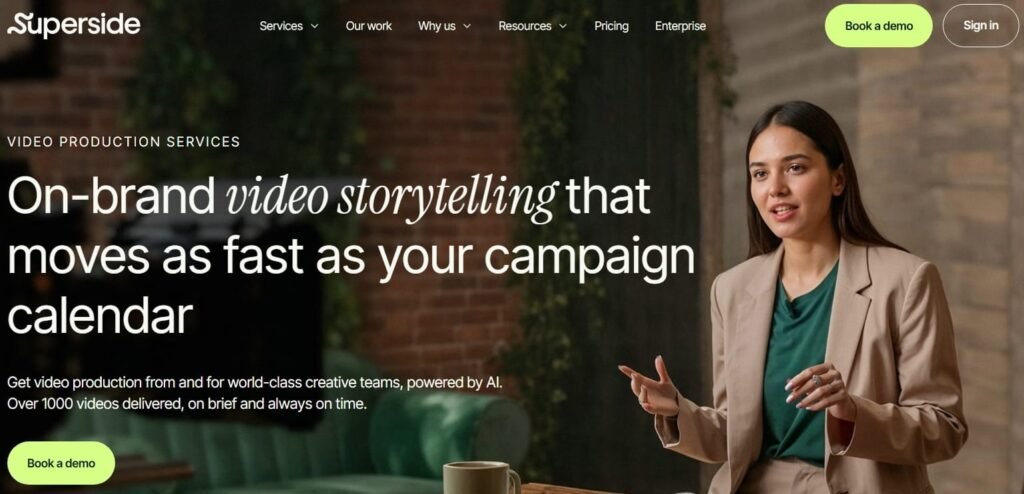
Superside is a large subscription creative service covering design and video together. If your team already needs ongoing design work, adding video to the same contract is efficient.
They are a design-first organisation that also does video, rather than a demo specialist. Their own published research covers the wider SaaS video production category rather than demos specifically.
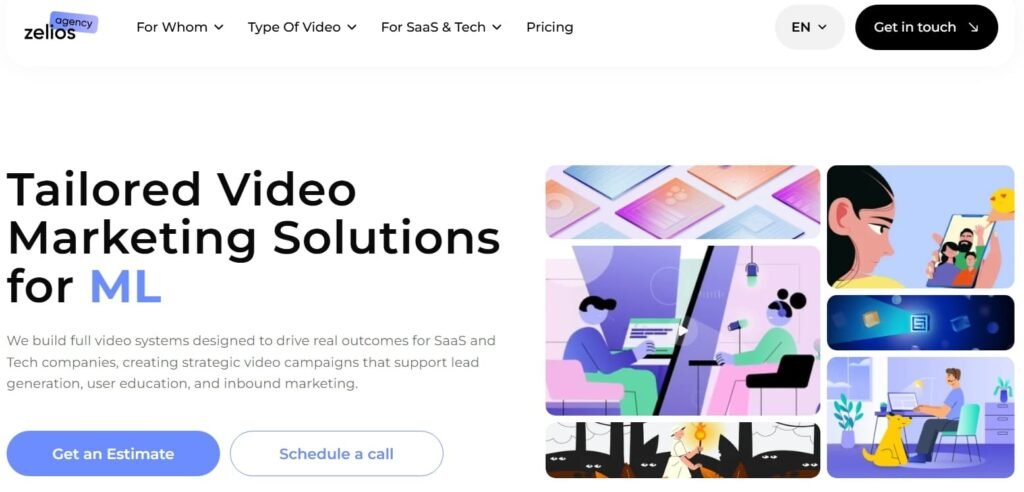
Zelios is a smaller studio focused on SaaS, AI and tech. Based in Ukraine, founded in 2018, they hold a 4.9 rating and cover explainers, how-to tutorials, video ads and full-funnel campaigns. They also help clients refresh and repurpose previously delivered videos, ensuring existing assets stay relevant across changing campaigns, platforms, and marketing goals.
Zelios helps integrate video into LinkedIn, YouTube, ad campaigns, email sequences, and landing pages. They also repurpose each video into short-form social content, GIFs and thumbnails.
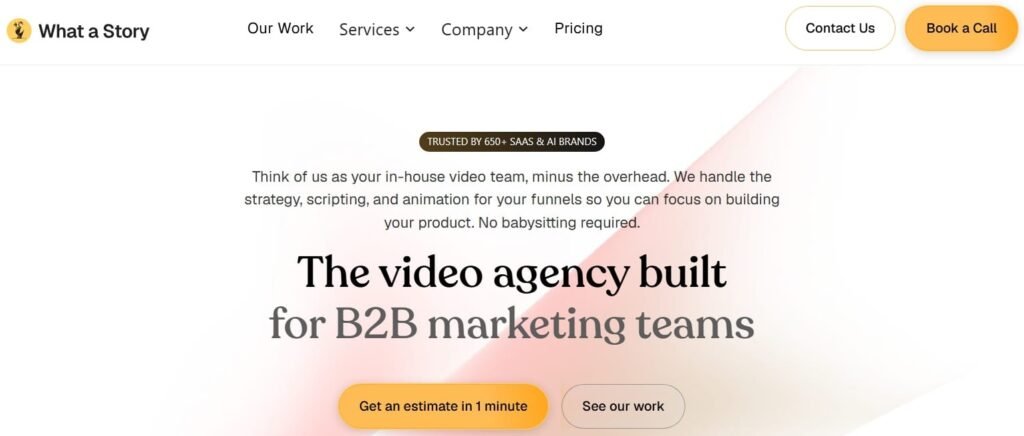
What a Story has focused on SaaS since 2015, building a strong reputation for animated product and brand videos. Their process is designed to help founders understand project scope early, with an AI-powered quote tool that provides a quick estimate before the sales conversation begins. This makes them a practical option for teams that want pricing clarity without committing to multiple discovery calls.
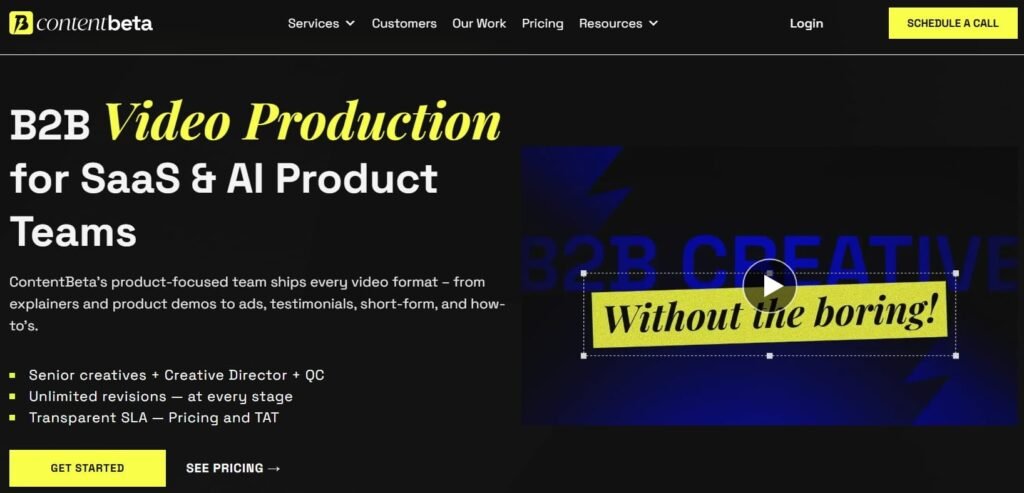
ContentBeta is a creative production partner helping B2B SaaS and AI product companies ship product demo videos, motion graphics, and launch assets. They provide a dedicated Creative Director, an in-house creative team, transparent asset-wise pricing with credit rollover, and US timezone coverage to help you move fast.
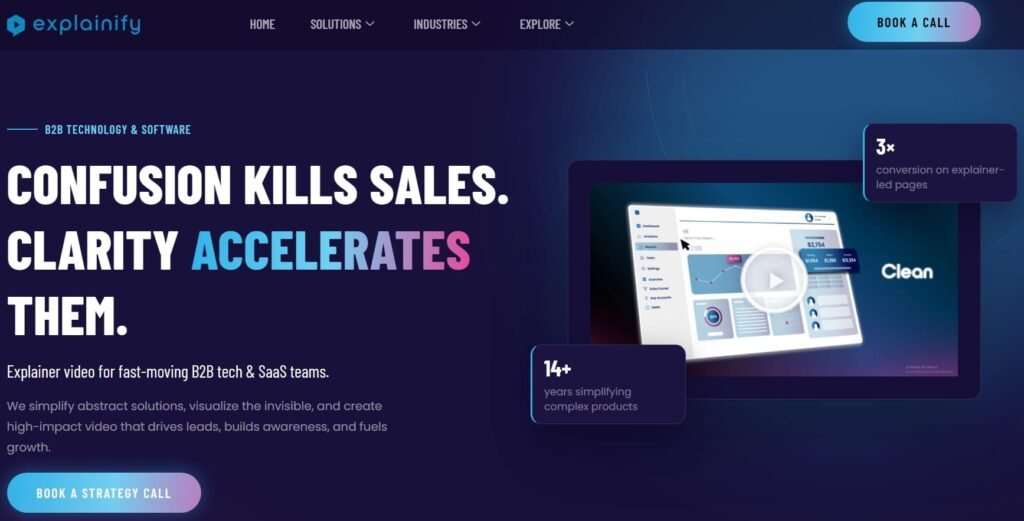
Explainify begins every project by understanding the customer’s pain points, buyer journey, and core messaging before moving into production. Their process emphasizes strategy, ensuring the script and narrative are aligned with business goals rather than relying solely on polished visuals or animation.
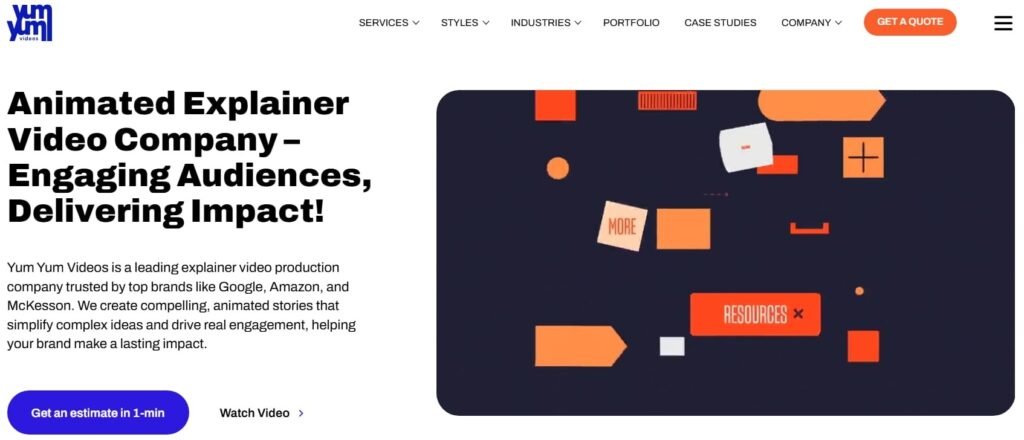
Yum Yum Videos has built its reputation around polished, high-production animated explainers for global brands such as Amazon, Google, and McKesson. Their work prioritizes clean storytelling, premium animation, and a structured production process that favors quality over speed. They are also refreshingly transparent about how they price projects, realistic delivery timelines, and the additional costs involved if you need a faster turnaround.
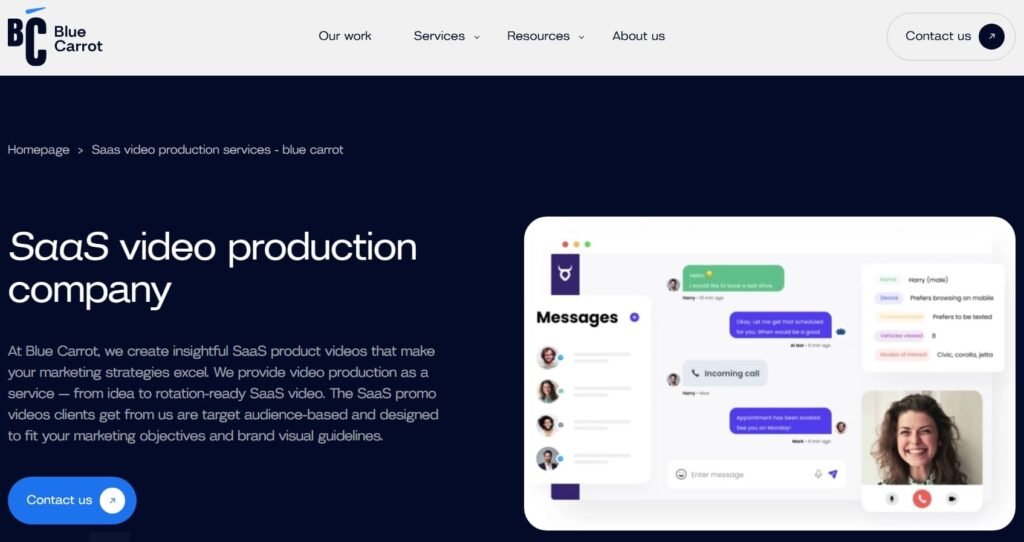
Blue Carrot specialises in educational and explainer content. They serve over 300 brands including universities and Fortune 500 companies, and have worked with SaaS platforms like BookingKit to communicate value to their users.
Thinkmojo is a boutique studio with a client list most agencies would envy. They serve Google, Slack and Salesforce, and produced a self-service video guide for Zendesk built to improve user engagement and retention. The team is small.
Tools like Arcade, Storylane and Navattic make clickable product tours. The buyer clicks through a replica of your UI at their own pace.
Use them when: you want a self-serve tour embedded on a pricing page, or a sales rep needs to send a personalised walkthrough after a call.
They cannot do: narrative, positioning, or an ad-ready video. All three produce interactive click-throughs only. None produce video demos with voiceover and branding. You cannot run a click-through tour as a LinkedIn ad.
Marketplace gigs are cheap and plentiful. Rates run from around $50 to $795, with a large cluster around $300 for SaaS demo and explainer work.
Use them when: the asset is low-stakes. An internal training clip, a quick feature update for existing users, a rough cut to test an idea.
Be careful when: the video carries a pipeline. You are buying execution. A freelancer will build exactly what you brief. If the brief is wrong, you get a polished wrong video. You also carry the project management. Scripting, feedback, revisions, chasing. That time is a real cost.
Use them when: positioning and scripting matter as much as the animation. When the video sits on your homepage, runs as a paid ad, or gets sent to a prospect deciding between you and a competitor.
An honest reflection: if this video underperforms, does it cost you deals? If yes, hire an agency. If not, a freelancer or a tool is probably fine.
Selling to developers is nothing like selling to HR directors.
If the writer has never seen your buyer’s objections, the script will be a feature list. Ask to speak to them directly.
Get the total. Then ask what happens if your feedback takes a week.
Get this in writing. Extra rounds commonly run $75 to $150 per hour of editing time, and “done” should be defined before you start.
A homepage demo can breathe. A LinkedIn ad has three seconds. If they say “we will make one video for everything,” they do not understand distribution.
Sandbox access? Brand kit? A recorded walkthrough? Vague answers here become delays later.
The hidden cost of cheap video is your own hours. Ask for the number of calls and review cycles expected.
The best answer is a concrete one. Refunds, extra rounds, or a rewrite at no cost. “That never happens” is not an answer.
Before you compare individual agencies, it helps to know the ballpark you are playing in. Demo videos tend to cluster into three price bands, and the gap between them comes down to how much strategy and hand-holding is baked in. The three below cover almost everything you will run into:
Freelance is cheap but you supply the thinking. Traditional production supplies the thinking but costs five figures and takes two months. The middle band buys you professional scripting and a working video for the price of a decent freelancer.
By now, you know there isn’t a single “best” demo video agency. The right choice depends on your budget, timeline, and the kind of outcome you expect from your video.
If you’re looking for a fast, affordable, SaaS-native approach without committing to a large upfront investment, Spear Growth lets you start with a free demo video so you can evaluate our thinking before spending a dollar. Just note that we only open five free slots a month through an application-based process.
If the result meets your expectations, we can continue with production at $300 per video and a five-business-day turnaround. If it doesn’t, you keep the video, no strings attached.
An explainer video talks about your product, usually with illustrations and metaphors. A demo video shows your product, using real UI. Explainers work when the concept is unfamiliar. Demos work when the buyer already understands the category and wants to see whether your version is good.
For a homepage or ad, 30 to 90 seconds. For a sales follow-up or deeper walkthrough, 2 to 4 minutes. Retention drops sharply past two minutes. If you need longer, cut it into several short videos by use case rather than one long one.
It depends entirely on the model. AI-assisted agencies deliver in about a week. Subscription studios take one to two weeks per asset. Traditional animation studios take six to ten weeks including feedback. Whatever number you are quoted, add your own review time.
Almost never, for a demo. The star of a demo video is your software. Live action makes sense for customer testimonials, culture videos, or brand films. For showing a product working, screen capture and motion graphics do the job better and cost far less.
Yes, when a human writes the script. That is the whole distinction. AI is genuinely good at animation, voiceover and consistency. It is bad at knowing why your buyer hesitates. The bad AI videos you have seen are bad because nobody wrote them properly.
Give them four things: who the buyer is, what problem they are stuck on, which single feature solves it, and where the video will be published. That is it. You do not need a script or a storyboard. If an agency needs more than that from you, you are doing their job for them.
Bipanchy is a B2B content writer with 8 years of experience crafting content for SaaS, AI, and tech brands. She has worked extensively across B2B SaaS, enterprise technology, and professional services, producing thought leadership, long-form articles, and case studies that support complex buyer journeys